
HAO TANG / SOFTWARE ENGINEER

Engineering across
data, software,
and decisions.

I’m Hao, a software engineer at PROS. My work connects full stack development, data processing, and integration with machine learning models for real-time airline pricing.

Currently building at PROS, Inc.

CONNECTING THE PIECES

DATA PROCESSING

Make data useful.

Working with large datasets through Databricks and ADF pipelines.

FULL STACK DEVELOPMENT

Connect the software.

Developing across the stack, with Java and Python in daily engineering work.

MODEL INTEGRATION

Support pricing decisions.

Integrating and adapting software around machine learning models used for pricing.

My engineering focus · airline pricing is the current application.

A FEW CHAPTERS
OF MY ENGINEERING STORY
PROSNOWGeneral MotorsBATTLE MOTORS

01 / SELECTED WORK

Different industries.
A connected perspective.

I’m drawn to the space where data, software,
and real-world operations come together.

CURRENT FOCUS · PROS, INC.

Full stack development.
Data to pricing.

At PROS, I work on real-time airline pricing through full stack development, large-scale data processing, and software that connects with machine learning models supporting pricing and offers.

My work combines Java and Python development with Databricks and ADF pipelines. It also involves integrating and adapting software to work with pricing models, connecting data processing with the applications that use it.

More on the problem space

PROS publicly describes request-specific pricing as using the context of a shopping request to inform a real-time price. Offer optimization is the broader goal: helping airlines present relevant offers as demand and shopping behavior change.

My day-to-day work sits in this domain, where data handling, software delivery, and pricing decisions come together.

IN MY DAY-TO-DAY

Java · Python · Databricks · ADF pipelines · Jenkins · GitHub

Databricks

Data processing

Working with large datasets in Databricks, alongside ADF pipelines.

Java & full stack development

Connecting data workflows with the applications and services that use them.
Conceptual illustration of connected machine learning model nodes

Machine learning integration

Integrating and adapting software around models used for pricing.

Conceptual illustration


Illustration of a passenger aircraft seen through an airport terminal at blue hour
THE APPLICATION: AIRLINE PRICINGAI-generated aviation illustration
AI tools mark

AI TOOLS & ENGINEERING HARNESSES

A method for reading before building.

I use AI tools to work through documents, ticket descriptions, feature requirements, and bug reports while keeping the source in view.

My reusable reading method gives me a short map first, then more detail only where a decision needs it. In a particular project, I connect that analysis to its specifications, code review, and checks.

REUSABLE READING METHOD

Summarize the goal, expected behavior, constraints, assumptions, and open questions. Expand one unclear or high-risk point at a time and trace the answer to its source.

PROJECT WORKFLOW

Carry those decisions into scoped work and review. Separate guidance for AI tools from checks that actually verify a change.

A READING PATH FOR HUMANS

See the shape first. Choose where to go deeper.

A long source becomes three levels of detail. The reader chooses a point to expand; each level stays connected to the original material.

START WITH SOURCE MATERIAL

Document · ticket description · feature request · bug report

  1. LEVEL 1 Fast human scan
    What is this about?

    Up to ten short points surface the goal, scope, expected behavior, constraints, and open questions. You can scan the whole issue without reading every line.

    Browse the overview

    A first pass contains up to ten points, each under 30 words. I look for the purpose, constraints, missing information, and which question deserves attention.

    Human choice: select one point that needs attention.

  2. LEVEL 2 Browse one point
    Why does it matter?

    Expand only the selected point in about a paragraph: its context, impact, assumptions, and evidence. Browse the detail without losing the whole picture.

    Open a focused explanation

    The chosen point expands to about 100 words. I can inspect its context and impact, follow the source, or choose another point from the overview.

    Human choice: stop here or ask for exact detail.

  3. LEVEL 3 Deep dive on demand
    What must we verify?

    When needed, examine exact requirements, dependencies, edge cases, affected behavior, acceptance criteria, and unresolved questions for that point, with claims traced back to sources.

    Inspect the exact details

    Only on request, I examine the selected point through requirements, dependencies, risks, impact, acceptance criteria, and next actions. Unknowns remain explicit.

    Result: a focused basis for a decision or further investigation.

THEN APPLY IT TO THE WORK

Feature: define the behavior, scope, impact, and acceptance criteria. Bug: compare expected and observed behavior, then investigate what the evidence supports.

In a project, I carry the result into its specification, review, and verification steps. AI helps organize the reading; I decide what the evidence supports.

OTHER PROBLEMS I’VE WORKED ON

Full-stack work, grounded in operations.
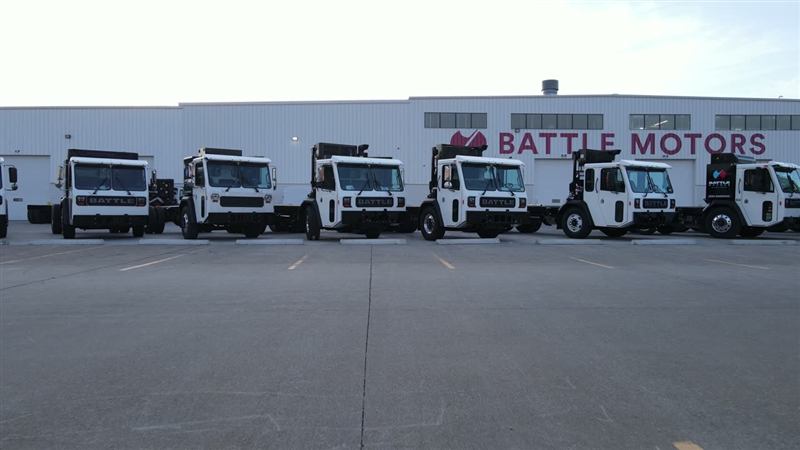
Battle Motors trucks lined up outside the company facility
Battle Motors trucks · Company imagery

BATTLE MOTORS

02

From a truck configuration
to the production floor.

The Battle Configurator connected quoting, approvals, orders, and production tracking. My full-stack work spanned the React and TypeScript interface, Java services, and MySQL queries.

Inside the work

Business workflows cross many boundaries. I worked on UI modernization, DocuSign approvals, SendGrid notifications, and database optimization, with Playwright checks for pricing workflows.

The engineering focus: connecting the interface to the work that happens after someone clicks “submit.”

An orange Chevrolet Corvette viewed from the rear three-quarter angle
Chevrolet Corvette · Company imagery

GENERAL MOTORS / EMERGE

03

Connecting the work
behind the vehicle.

At GM in Austin, I led backend development on the Emerge team, supporting procurement, engineering, and order workflows. The work reached from Java services to a TypeScript UI.

Inside the work

I worked with Spring Boot, Hibernate, Redis, MySQL, PostgreSQL, and Azure DevOps. I also contributed reusable Angular components, reviewed code, and helped the team resolve delivery issues.

The engineering focus: dependable business workflows, shared components, and coordinated delivery.

02 / ABOUT HAO

I follow the problem
through the system.

I came to software through manufacturing, automation, materials engineering, and physics. That background taught me to ask what happens beyond the screen.

At General Motors, I led backend work for business workflows that connected procurement, engineering, and orders. At Battle Motors, I built across the interface and services of a truck configurator, from quote through production tracking. Those experiences made me attentive to the handoffs that make software useful in practice.

Today at PROS, the setting is airline pricing and offers. I enjoy tracing a problem from data through services to the decision a person sees, then making the path more dependable and easier to understand. My computer science master's work added another way to explore data and systems; a few of those earlier experiments appear below.

03 / FROM THE ARCHIVE

Where curiosity
became code.

A few experiments from my master’s studies.
The foundations behind the work I do today.

Selected academic work, completed by 2020. A small window into an ongoing curiosity.

04 / THE NEXT CONVERSATION

Good things start
with a conversation.

Have an interesting problem, a project, or a shared curiosity?
I’d love to hear about it.

Let’s connect
on LinkedIn (opens in a new tab)

A NOTE OR A QUESTION

Leave a message.

Share feedback on the portfolio or get in touch about your work.

Messages are private and are not published on this page. I’ll use your email only to reply. Visits and messages may record your network IP and an approximate location. IP/location retention: no automatic expiry. IPs are sent to ipwho.is for location estimates; they do not reveal a street address. Visit record retention: no automatic expiry. Visit tracking respects Do Not Track and Global Privacy Control. Please avoid sending confidential information.

Include an email for a reply. It’s optional for portfolio feedback.

20–4,000 characters.

The message form is being set up. You can connect through LinkedIn above.